logo
DeepForce

Build and deploy supervised multi agent systems with specialist subagents and full observability for business workflows

Design supervisors that dispatch to specialist subagents, wire tools and knowledge, test flows live, and deploy to widget, API, or email channels.

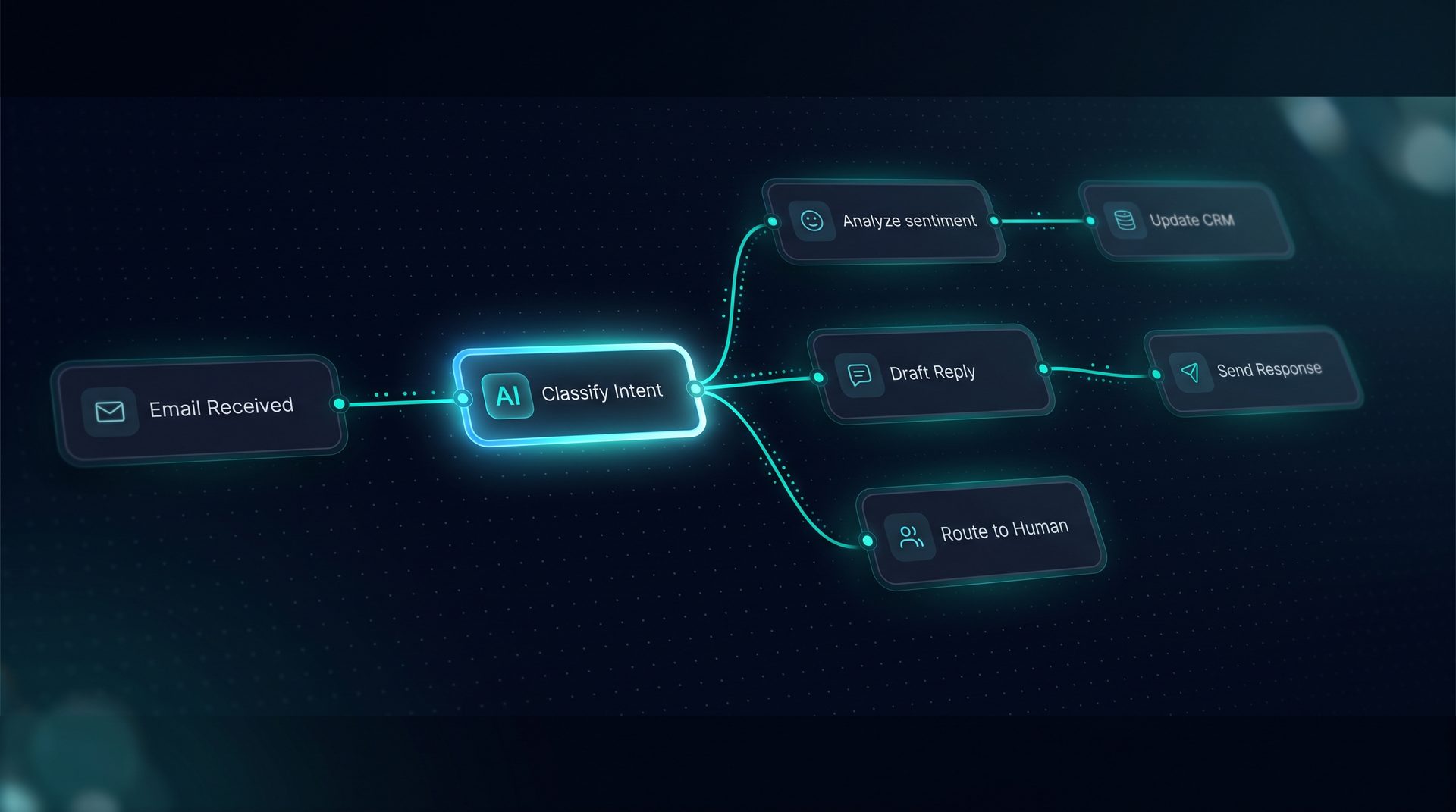
DeepForce visual canvas wiring agents, tools, and knowledge into a live workflow

Multi-Agent Systems Visualized

This is an ai-generated page and could contain misleading information.Please verify any information first before take any action.

Multi agent systems you can wire, test, and ship visually

What multi agent systems are and why they matter

Multi agent systems coordinate multiple AI decision-makers to solve complex workflows that a single model cannot handle efficiently. In business settings, multi agent systems break large problems into specialist tasks — classification, retrieval, API integration, and human review — then orchestrate those pieces into a reliable flow. This approach improves fault isolation, makes debugging easier, and maps directly to organizational roles such as support, approvals, and analytics.

Expert tip: treat a supervisor as the policy layer — it routes intent and aggregates specialist results into a single coherent response.

Key concepts

  • Supervisor node: decides which subagent or path to call based on context.
  • Specialist subagent: owns a model, tools, prompts, and knowledge for a focused responsibility.
  • Observability spans: track tokens, latency, and subagent dispatches so you can trace decisions.

How multi agent systems work — step by step

  1. Ingest: a trigger arrives via webhook, email, widget, or API.
  2. Supervisor: a Deep Agent supervisor assesses the request and selects one or more specialist subagents.
  3. Specialist execution: each subagent calls models, retrieval, or tools (SQL, REST, GraphQL) as needed.
  4. Aggregation: the supervisor merges outputs, applies transforms, and decides whether to route to a human-in-the-loop node.
  5. Deploy: the pipeline publishes to a web widget, Run API, or email channel.

This pattern scales: parallel fan-out for enrichment, classifiers for routing, and pause nodes for approvals. Using this explicit structure reduces surprise behaviors and focuses evaluation on targeted pass/fail criteria.

Who should adopt multi agent systems

  • Product teams building embedded agents for customer support or in-app assistants.
  • Ops teams automating approvals, routing, and data syncs without writing framework code.
  • Research teams prototyping supervisor/specialist topologies before productioning them.

These stakeholders benefit from an environment that exposes model calls, tool integrations, and the live compiled prompt so non-developers can author workflows safely.

Design patterns and best practices

Supervisor-as-orchestrator

Use a lightweight supervisor that routes based on intent and metadata. Keep the supervisor's prompt concise and delegate domain logic to specialists.

Specialist encapsulation

Make each specialist responsible for one capability: data retrieval, summarization, or an autonomous agent style executor that runs scripts against an internal toolset. Encapsulation simplifies testing and reduces blast radius when updating models or tools.

Observability and governance

Instrument every run with span trees and token accounting. Blocked term policies and project-level PII redaction should apply across the whole multi agent systems architecture.

Tooling and integrations you need

Multi agent systems rely on reliable tool invocation and safe network access:

  • REST and GraphQL connectors for internal APIs
  • SQL and code tools for database lookups and transforms
  • Built-in tools that are auto-provisioned and cannot be deleted for baseline safety

Use JMESPath projections to trim payloads before model calls and configure retries, rate limits, and caching per tool to keep runs predictable.

Testing, evaluation, and iteration

  • Playground testing: light up nodes as runs stream to see live state and debug routing.
  • Evaluations: run datasets against each workflow and score with contains, regex, or LLM-judge metrics to iterate on prompts and classifiers.

Callout: evaluate subagents independently and as a composite. Observability that shows supervisor dispatches and subagent spans makes root-cause analysis faster.

When to choose a multi agent approach vs a single agent

Choose multi agent systems when tasks are clearly separable (e.g., retrieval + summarization + approvals), require different models or tool access, or need parallelism for latency. For small single-turn tasks, a single agent may suffice, but as complexity and governance needs grow, multi agent systems are easier to maintain.

How DeepForce demonstrates these patterns (example, not a hard sell)

DeepForce exposes a visual canvas where a Deep Agent supervisor dispatches named subagent spans. You can drag from a subagent handle to create specialist nodes, assign different models, attach tools, add Q&A intercepts, and test the full run in the Playground. Deployments support web widgets, inbound email, Run API, and MCP server channels, with per-node observability and export to OpenTelemetry collectors.

This example shows how a supervised multi-agent topology maps to real channels and governance controls while keeping authoring accessible to non-developers.

Common pitfalls and how to avoid them

  • Overloaded supervisor prompts: keep routing logic compact and move domain logic to subagents.
  • Uncontrolled tool access: group tools into named sets and grant them explicitly to subagents.
  • Poor observability: require span-level tracing and token accounting during testing.

Quick checklist to get started

  • Map your business process into discrete responsibilities.
  • Design one supervisor prompt and one subagent per responsibility.
  • Configure toolsets and environment-specific endpoints.
  • Test in the Playground and enable span tracing for every run.
  • Deploy to a channel that matches your users: widget, email, or API.

Summary

Multi agent systems decompose complex workflows into supervisors and specialists so teams can iterate, observe, and govern AI decision-making. They are particularly valuable for teams that need to connect models to tools, enforce privacy and quotas, and include human-in-the-loop steps. When built with careful encapsulation and observability, multi agent systems reduce maintenance complexity and align automation with organizational roles.

The canvas behind every agent you ship.

Wire it once. Deploy it everywhere.
Introducing DeepForce

Wire it once. Deploy it everywhere.

DeepForce is a visual AI agent builder and automation platform. Compose agents, tools, knowledge, and logic on a drag-and-drop canvas — then publish to an API, MCP server, email inbox, or embeddable web widget without writing framework code. Built on MIT-licensed LangChain and LangGraph, self-hosted on infrastructure you control.

  • Visual drag-and-drop agent and workflow builder
  • Span-level observability with tokens, latency, and cost
  • Deploy to web widget, email, run API, or MCP server
30+
Workflow node types
4
Deployment channels
6
Knowledge file formats
Core capabilities

Everything you need to run autonomous ops.

AI agents that act

AI agents that act

Agents execute multi-step workflows without hand-holding.

Real-time reasoning

Real-time reasoning

See exactly how the AI thinks and decides

Human-in-the-loop

Human-in-the-loop

Approve, override, or audit any decision before it ships.

Other features:
Visual workflow canvas
API integrations
Document ingestion
Audit trail
Role-based access

Frequently asked about multi-agent systems

Multi agent systems are used to decompose complex business workflows into supervisor and specialist components. A supervisor routes requests to specialist subagents that each handle a focused responsibility such as retrieval, classification, or tool invocation. This structure maps to organizational roles—support, approvals, analytics—and improves maintainability. Teams can test components independently, trace decisions via observability spans, and add human-in-the-loop nodes for approvals. The result is automation that is easier to govern, debug, and iterate without requiring deep engineering changes.
A supervisor evaluates incoming context and selects subagents or paths based on classification, metadata, or deterministic rules. In practice, you author a concise supervisor prompt that calls named subagent handles; each subagent has its own model, tools, and prompt. The supervisor aggregates results and decides on next steps, including routing to human review or merging parallel outputs. Observability captures each dispatch as a named span so you can inspect latency, token usage, and nested subagent activity for debugging and auditing.
Yes. Multi agent systems commonly assign different models to specialist subagents according to task needs. For example, a retrieval subagent might use a smaller, cheaper model for filtering, while a summarization subagent uses a larger model for quality. Deep agent architectures let you configure model selections per subagent and test the combined behavior in the Playground. This enables cost-effective routing and targeted improvements without changing the entire system.
Tools integrate via named toolsets and per-tool configuration: REST, GraphQL, SQL, and code-based connectors. Configure retries, rate limits, caching, and JMESPath projections to trim payloads. Apply SSRF guards for outbound calls and environment-specific endpoints for staging or production. Group tools into grantable sets so specialist subagents get only the permissions they need. Governance features like network allow/deny lists and project-level PII redaction apply across the system to reduce risk.
Observability surfaces every run as a collapsible span tree showing latency, tokens, and cost per step. Named subagent dispatches appear as subagent spans so you can see which specialist executed and why. The Playground streams a live activity timeline and the export capability sends traces to OpenTelemetry collectors such as Langfuse. This granular visibility helps you debug routing, measure token usage, and identify bottlenecks in multi agent systems.
Prefer multi agent systems when tasks are separable, require different tool access or models, demand parallel processing, or must satisfy governance and human-in-the-loop requirements. If a workflow involves retrieval, transformation, external API calls, and approvals, splitting those concerns into specialist subagents yields better testing, targeted updates, and clearer audit trails. For very simple single-turn tasks, a single agent may be sufficient, but complexity and organizational scale often favor a multi agent approach.
Human-in-the-loop steps are nodes that pause a workflow for review and approval. When a pause node triggers, the run halts and routes to a human inbox; replies resume the session over the same channel. This pattern is useful for sensitive decisions, escalations, or quality checks. Use clear handoff prompts and audit logs to track decisions. Multi agent systems make human review targeted—only the relevant specialist output needs approval, reducing review burden.
Common mistakes include overloading the supervisor with domain logic, granting excessive tool permissions to subagents, and lacking span-level observability. Avoid monolithic prompts by moving domain-specific behavior to specialist subagents. Configure toolsets and environment variables carefully, enable PII redaction and blocked-term policies, and test thoroughly in the Playground. Ensuring per-node tracing and token accounting will prevent surprises in production and make iteration faster.

Your Competition Is
Already Using AI.

Every day you wait is another day paying employees to do what AI does better, faster, and cheaper.