Build your own ai model
This page focuses on the concrete choices and trade-offs behind the decision to build your own ai model. If you arrived having already read a high-level primer, this guide moves past basics to the mechanisms that separate building an ai model from using or adapting existing systems. The phrase build your own ai model appears early because many searches for that term are actually about fine-tuning, self hosted ai, or assembling agents rather than training from scratch.
When "build your own ai model" really means adapt or fine-tune
Most projects that start with the goal to build your own ai model can be satisfied by one of three narrower approaches:
- Fine-tuning an existing base model on domain data.
- Prompt engineering and orchestration around a hosted model.
- Self-hosted ai deployments of open weights with light customization.
Understanding these options helps avoid spending months on a from-scratch training project when a different approach meets the need.
Fine-tuning versus training from scratch
Fine-tuning updates an existing model's weights using domain-specific data. Training from scratch builds a model starting with random weights and a training corpus. The difference matters because fine-tuning typically requires far less compute and domain data, while training from scratch requires substantial expertise in model architecture, data curation, and long iterative experiments.
What most people miss is that fine-tuning can deliver comparable task performance for narrowly scoped problems, and that the label build your own ai model is often used when fine-tuning is the correct, more practical path.
Practical signals to prefer fine-tuning
- The task is narrow and you can collect a labeled dataset.
- You need domain-adapted behavior but not novel model architecture.
- You want to reduce inference latency by pruning or distillation rather than redesigning core layers.
When to choose self hosted ai
Self hosted ai means running models on infrastructure you control, often using ai open source weights. Choose self hosted ai when data residency, latency control, or predictable costs matter. Self hosting includes trade-offs:
- Infrastructure and operations overhead rises because you must provision GPUs or accelerators, manage scaling, and handle monitoring.
- Upkeep includes security patching and model lifecycle management.
Self hosted ai can make sense when regulatory constraints or near-real-time inference are critical. It also enables experimentation with building ai models that are tailored to specialized hardware and cost profiles.
Important to know: outcomes can vary by project. Costs and timelines may be longer or shorter than expected and choices you make early can affect future flexibility.
The role of ai open source in building models
Open source model weights and community tooling lower the barrier to building or adapting models. Using ai open source resources enables:
- Inspecting model internals and customizing architecture.
- Running local experiments with fewer restrictions than hosted services.
- Combining community extensions like quantization recipes or lightweight runtimes.
However, open source also shifts responsibility for maintenance and security onto the team that deploys the model. When using ai open source components, plan for ongoing updates and testing.
Create your own ai model: realistic project steps
If the intent is truly to create your own ai model (rather than adapt), a realistic roadmap includes these stages:
- Define narrow success metrics and failure modes for the target task.
- Collect and curate a training corpus with representative examples and edge cases.
- Select a model family and scale appropriate to the problem (and budget).
- Build a training pipeline for data preprocessing, augmentation, and validation.
- Run iterative experiments, track hyperparameters and model checkpoints.
- Evaluate with held-out validation and test sets, including adversarial examples.
- Prepare a deployment plan that covers inference optimization and monitoring.
Each step has technical depth: data curation often dominates project effort, while deployment demands different engineering skills than research experimentation.
Create own ai model vs assemble an agent
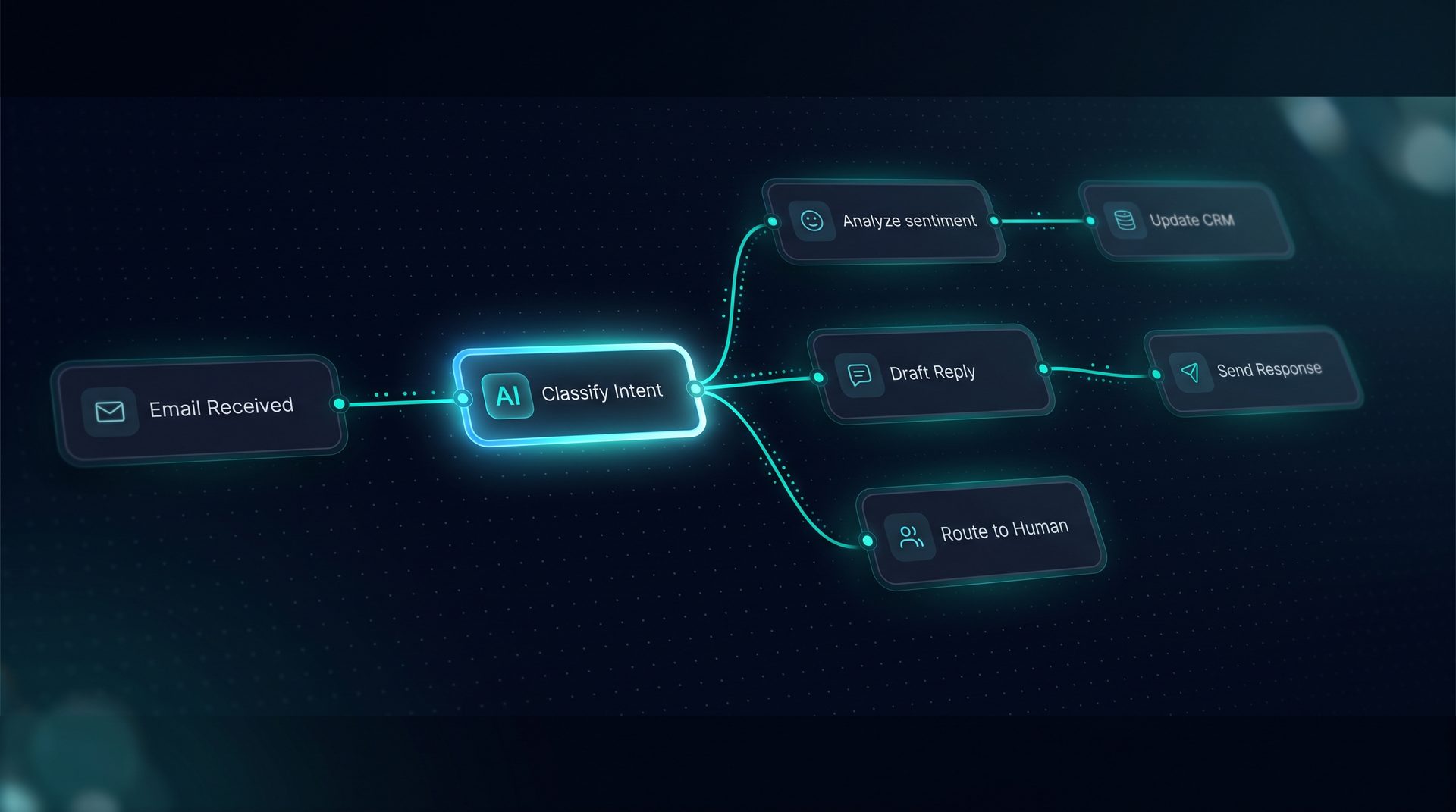
Building an agent that composes existing capabilities (retrieval, reasoning chains, external tools, and UI) is often more pragmatic than building a new model. Agents let teams deliver complex behavior by orchestrating models and connectors instead of training new architectures. If the primary goal is application behavior rather than advancing model science, assembling an agent may achieve outcomes faster and with less risk.
Building ai models: trade-offs and edge cases
Trade-offs to weigh when building ai models include:
- Data quantity versus data quality: large uncurated datasets can introduce noise; smaller curated datasets can be more effective for specialization.
- Model scale versus operational cost: larger models can perform better but increase inference and hosting expenses.
- Custom architecture versus community standards: novel architectures may win in research settings but reduce transferability and support.
Edge cases where building from scratch makes sense:
- Research requiring novel architecture innovations.
- Proprietary modalities or sensors with no public datasets.
- Situations demanding extremely tight control over model internals for compliance or IP reasons.
Cost and skill trade-offs explained
Human talent and compute are the two primary cost drivers. Building ai models requires expertise in machine learning, data engineering, and systems engineering. Fine-tuning and self hosted ai lower compute and time barriers but still require experienced practitioners to get robust production results. Teams with limited ML experience may find that good prompt engineering and agent composition deliver more immediate value.
Practical guidance: choose the right path
Use this quick decision guide to map goals to approaches:
- Need to solve a narrow task and have labeled data: consider fine-tuning or lightweight self hosted ai.
- Need application-level behavior that integrates tools or knowledge: prefer assembling a visual or programmatic agent.
- Need research-level model changes or unique modalities: plan for building an ai model from scratch with the appropriate team and timeline.
Implementation details that matter
- Data preparation: ensure representative examples and explicit handling of edge cases.
- Evaluation: use realistic scenarios and continuous monitoring to catch drift after deployment.
- Inference optimization: techniques such as quantization, distillation, and batching can reduce operational cost for self hosted ai.
Conclusion
The phrase build your own ai model covers a spectrum from fine-tuning and orchestration to full-scale model research. Most practical projects are better served by adapting existing models, self hosted ai deployments, or building agents that combine capabilities. Those who truly need to create your own ai model or build novel architectures should plan for longer timelines, more specialist skills, and ongoing operational commitments.
Notes: project outcomes can vary and results may change based on data quality, infrastructure, and team expertise. Avoid assuming a single approach will always work; evaluate trade-offs for each project.