Multi Agent Systems Ai: When Multiple Agents Beat One Agent
Multi agent systems ai describes architectures where multiple autonomous or semi-autonomous agents collaborate, compete, or coordinate to solve tasks that a single agent cannot handle as well. This deep-dive assumes familiarity with basic agent concepts; it focuses on the operational mechanics, common patterns, trade-offs, and platform considerations you need to decide when a multi agent approach is warranted.
Why Choose Multi Agent Systems Ai
When a problem decomposes naturally into subproblems, when different capabilities are needed in parallel, or when robustness and specialization matter, a multi agent ai design can outperform a monolithic agent. Multi agent ai lets teams map responsibilities to specialist agents, scale parts of a system independently on a multi agent platform, and isolate failures so other agents can continue working.
Important to know: using multi agent systems ai can add coordination cost and complexity. Benefits may vary by workload and environment and are not guaranteed.
Core Mechanisms and Architectures
Supervisor / Orchestrator Pattern (An H2 containing primary keyword)
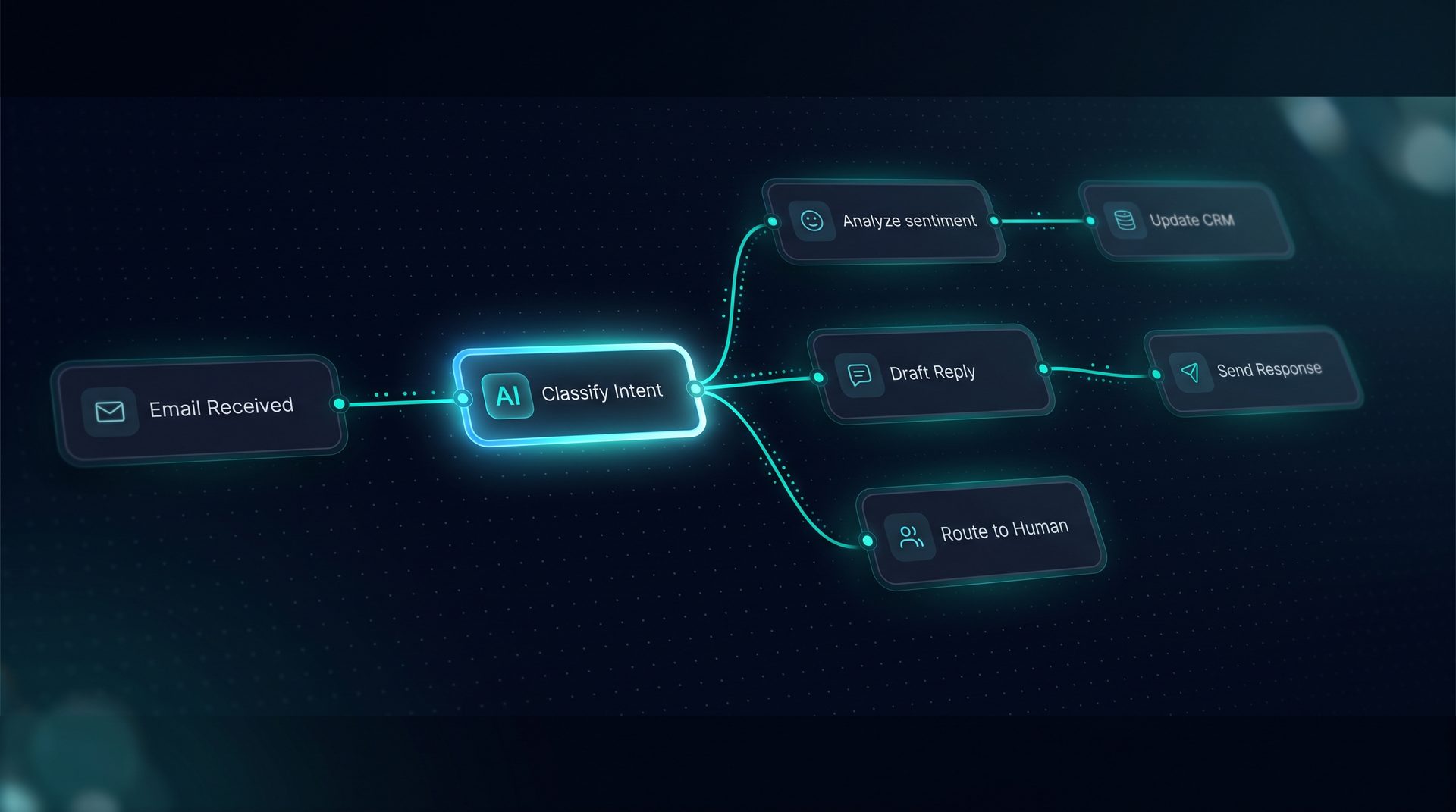
A common structure is a supervisor agent that assigns tasks to specialist subagents and integrates their outputs. The supervisor handles routing, conflict resolution, and global state. In practice:
- The supervisor receives a goal or input.
- It decomposes the goal into subtasks and selects or invokes specialist agents.
- It aggregates results and makes final decisions or returns a composed output.
This pattern is central to many multi agent platform designs because it balances specialization with a single source of coordination. The supervisor may be simple (rule-based) or itself a learning agent.
Peer-to-Peer Coordination
In some designs, agents coordinate directly with each other using protocols, shared memory, or message passing. Peer coordination reduces central bottlenecks but requires explicit conflict resolution strategies, consensus algorithms, or negotiation mechanisms. This suits scenarios where decentralized control improves resilience or latency.
Hierarchical Systems
A hierarchical multi agent ai system nests supervisors: high-level planners coordinate mid-level managers, which in turn orchestrate low-level specialists. Hierarchies work when tasks have multiple levels of abstraction and when delegation reduces cognitive load on any single agent.
Market and Auction Models
For resource allocation problems, multi agents systems often use market-style mechanisms. Agents bid for tasks or resources, and an auctioneer resolves allocations. This approach introduces economic incentives and can scale to many agents, but it requires careful design of utility functions.
Typical Agent Roles and Specializations
- Specialist agents: Focus on a single capability (e.g., language understanding, search, scheduling). Specialization improves accuracy and efficiency when responsibilities are well-defined.
- Generalist agents: Handle broad tasks where context switching is low-cost or where integration across skills is necessary.
- Supervisor agents: Manage task allocation, reconciliation, and policy enforcement.
- Mediator agents: Resolve conflicts or handle multi-agent negotiation.
Using agents and multiagent systems deliberately helps clarify responsibilities but also creates surface area for coordination errors.
Trade-Offs: When Multi Agent Ai Helps — And When It Hurts
Advantages:
- Parallelism: Multi agents systems allow parallel processing of subtasks.
- Specialization: Specialist agents can provide better performance on focused tasks than a single generalist.
- Fault isolation: Failures can be contained to individual agents, improving overall robustness.
- Incremental development: Teams can develop and deploy agents independently on a multi agent platform.
Costs and challenges:
- Coordination overhead: More agents require protocols for communication, synchronization, and conflict resolution.
- Latency: Multiple communication hops can increase response time unless carefully engineered.
- Consistency: Maintaining shared state across multi agents systems can be complex and may require eventual consistency or consensus.
- Debugging and observability: Tracing behavior across many autonomous agents demands richer logging and monitoring.
Important to know: the benefits of multi agent ai can depend on workload characteristics; some improvements may be subtle and require careful measurement.
Practical Design Patterns and Recommendations
-
Start with capability mapping. Identify distinct capabilities that could be cleanly implemented as specialist agents (e.g., extraction, reasoning, retrieval). Use that mapping to assess whether a multi agent platform adds value.
-
Define clear interfaces. Agents and multiagent systems succeed when each agent exposes a well-specified contract for inputs, outputs, and error modes.
-
Minimize synchronous chains. Design for asynchronous messaging or batch communication where possible to reduce compounded latency and coupling.
-
Use layered coordination. Combine a lightweight supervisor for common routing with peer negotiation only when necessary.
-
Embrace observability. Build tracing, correlation IDs, and structured logs so that interactions across agents are explainable.
-
Design fallback strategies. When a specialist agent fails or returns low-confidence output, supervisors should have graceful degradation paths.
Common Multi Agent Platform Capabilities
A robust multi agent platform typically provides:
- Service discovery and routing so supervisors can find specialist agents.
- Messaging primitives for low-latency interaction or durable task queues for resilience.
- State stores or shared memory abstractions with clear consistency guarantees.
- Instrumentation and tracing for debugging complex flows across multi agents systems.
- Policy controls to enforce permissions and safety across autonomous agents.
Choosing or building a multi agent platform entails balancing flexibility against the operational burden of maintaining these components.
Edge Cases And Failure Modes
- Cascading failures: A failing agent that blocks a supervisor’s decisions can cause system-wide degradation. Avoid deep synchronous chains and add timeouts and circuit breakers.
- Conflicting recommendations: Multiple agents may propose incompatible outputs; implement arbitration strategies such as rule-based prioritization or confidence-weighted voting.
- Over-specialization: Too many narrowly focused agents increase communication costs and integration complexity. Group small capabilities where possible.
- Shared state contention: Concurrency in multi agents systems can produce race conditions; adopt clear consistency models and versioning.
When To Prefer Agent Based Ai vs Monolithic Models
Prefer agent based ai when:
- The domain decomposes into separable subtasks with different skill sets.
- Independent scaling of components is advantageous.
- Isolation of failure domains is important for reliability.
Prefer a monolithic or single-agent approach when:
- Task latency constraints penalize additional coordination steps.
- The problem requires tight, low-latency integration of many skills that are simpler to optimize inside one model.
Example Scenarios
- Complex data workflows: Multi agents systems help by delegating extraction, normalization, and validation to different agents and combining results via a supervisor.
- Conversational assistants with modular skills: Specialist agents handle calendar, search, and domain-specific dialogs while a coordinator routes user intents.
- Distributed decision-making: Peer-to-peer multi agent ai with negotiation suits environments where decentralized control and resilience are priorities.
Conclusion
Multi agent systems ai offers powerful ways to organize complexity through specialization, parallelism, and modularity. The decision to use multi agent ai hinges on the specific trade-offs of coordination cost, latency, observability, and scalability. Thoughtful interface design, clear coordination patterns like supervisors or market models, and platform features for messaging and tracing are essential to capture the advantages while mitigating the costs.
Notes: Outcomes may vary depending on workload, infrastructure, and design choices. The benefits of multi agent systems ai can depend on many implementation variables and are not guaranteed.